Instructions:
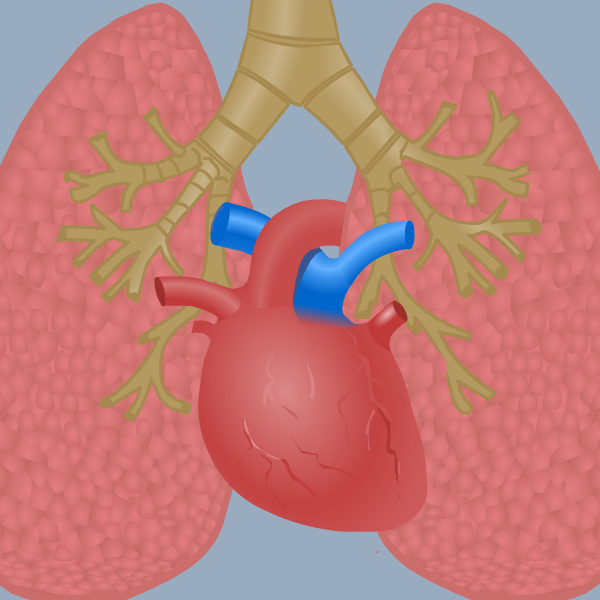
- Press the Respiration System. Follow the oxygen's pathway, from when it enters the body through the lungs until it enters the cells.
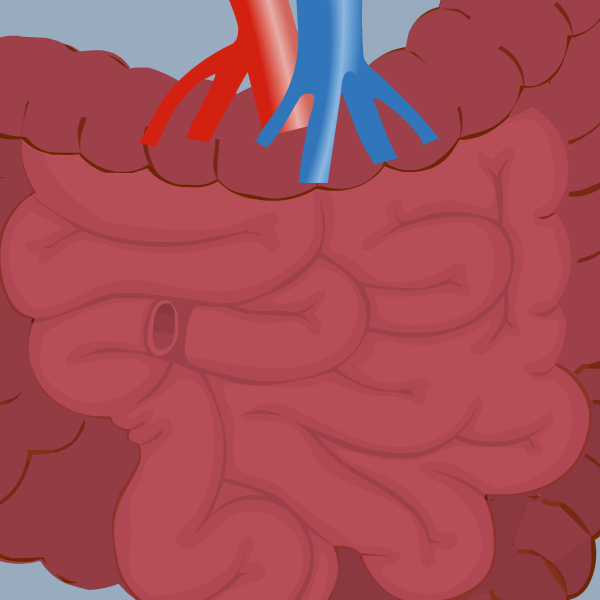
- Press the Digestive System. Follow the food's pathway, from when it enters with body through the mouth until glucose enters the cells.
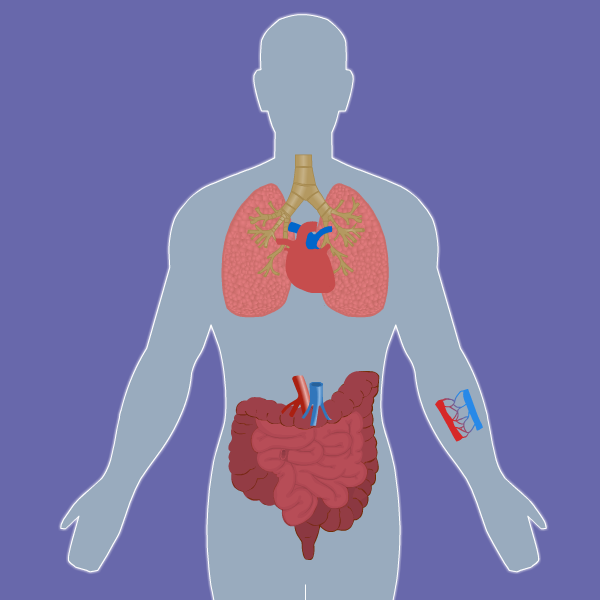
- Notice the different scale changes in the images – moving from the body view to the views of organs, tissues, and cells. Follow the pathways of the reactants and products of cellular respiration.
Cellular Respiration


The Human Body
Different body systems - such as the digestive system, respiratory system and circulatory system – work together to provide a continuous supply of O2 and food to the body's cells. The O2 and glucose which reach the cells are vital for cellular respiration. This process provides the energy necessary for the cells' activities.
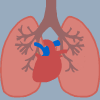
The Lungs
Blood low in O2 and high in CO2 reaches the lungs from the rest of the body. This blood is pumped from the heart to the lungs, through the pulmonary artery. From the lungs, blood high in O2 and low in CO2 flows through the pulmonary veins to the heart, and from there to the rest of the body.
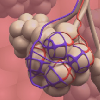
The Alveoli
The blood vessels in each lung branch out into smaller and smaller vessels, until they turn into capillaries that wrap around the alveoli of the lungs. Alveoli are grape-like air sacs where gas exchange occurs. Blood low in O2 and high in CO2 arrives from the body to the lung's capillaries. After gas exchange in the alveoli, blood rich in O2 and low in CO2 circulates through the lung's capillaries and to the rest of the body.
Gas Exchange in the Alveoli
In the lungs, gas exchange occurs between the blood and the millions of alveoli: oxygen diffuses from the alveoli to the capillaries that surround them, and CO2 in the capillaries diffuses into the alveoli. In this way, blood high in O2 and low in CO2 leaves the lungs.
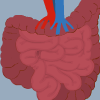
Small Intestine
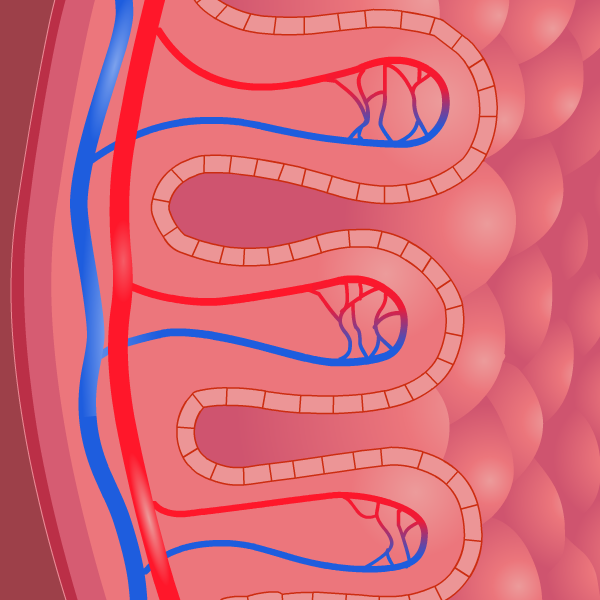
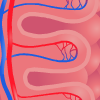
In the small intestine, food breaks down into simple sugars, amino acids, fatty acids, and other materials. These products of food breakdown are absorbed and transferred from the small intestine, through its veins, into the blood.
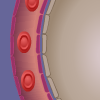
Inner Wall
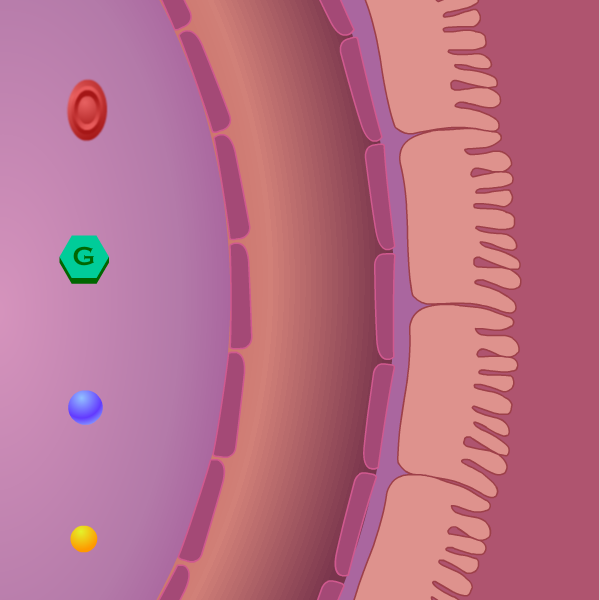
The inner wall of the small intestine is made up of cells from the intestinal epithelium (intestine skin cells). These cells, known as villi, are organized as small finger-like projections on this inner wall. The villi increase the intestine's surface area, which increases food absorption, since many capillaries pass through the villi.
Absorption of Food from the Small Intestine to the Capillaries
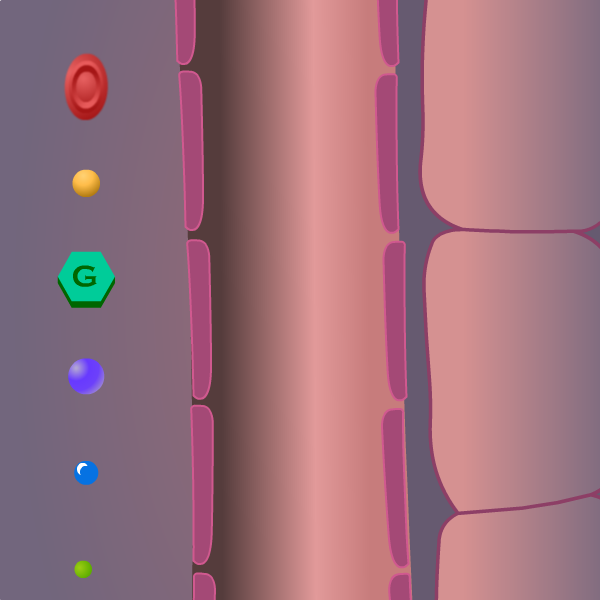
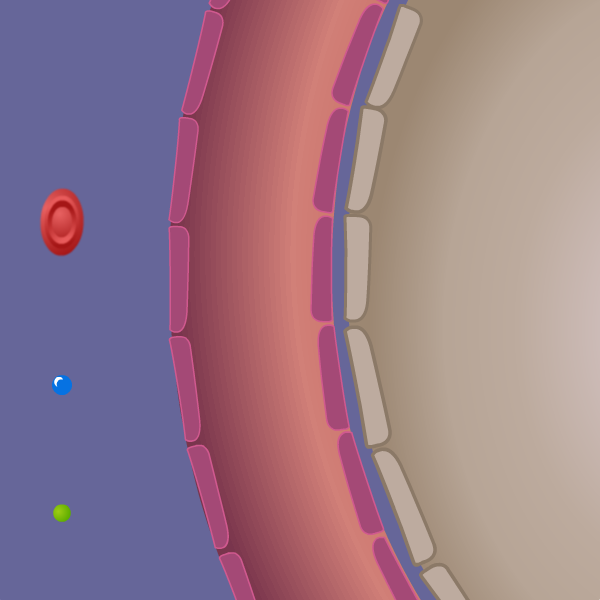
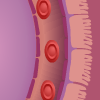
The epithelial cells of the villi have small finger-like projections, called microvilli, which face the open space of the intestine, where food particles are located. These microvilli also contribute to increasing the surface area through which the products of food breakdown are absorbed. These products are absorbed into the epithelial cells, and from there pass into the blood stream through the capillaries.
Passage of O2 and Glucose to the Cells; Cellular Respiration
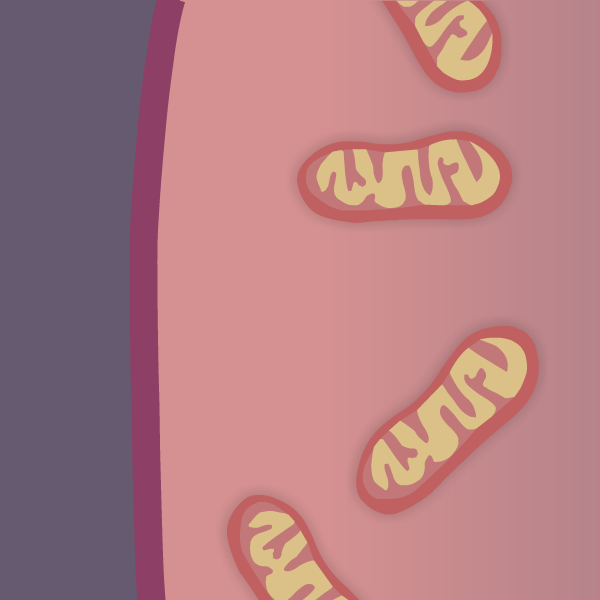
In cellular respiration, the glucose and oxygen react to produce CO2, H2O and energy (which is used by the cell). The CO2 and other waste materials are removed from the cells into the capillaries. Click the magnifying glass symbol to see this process.